

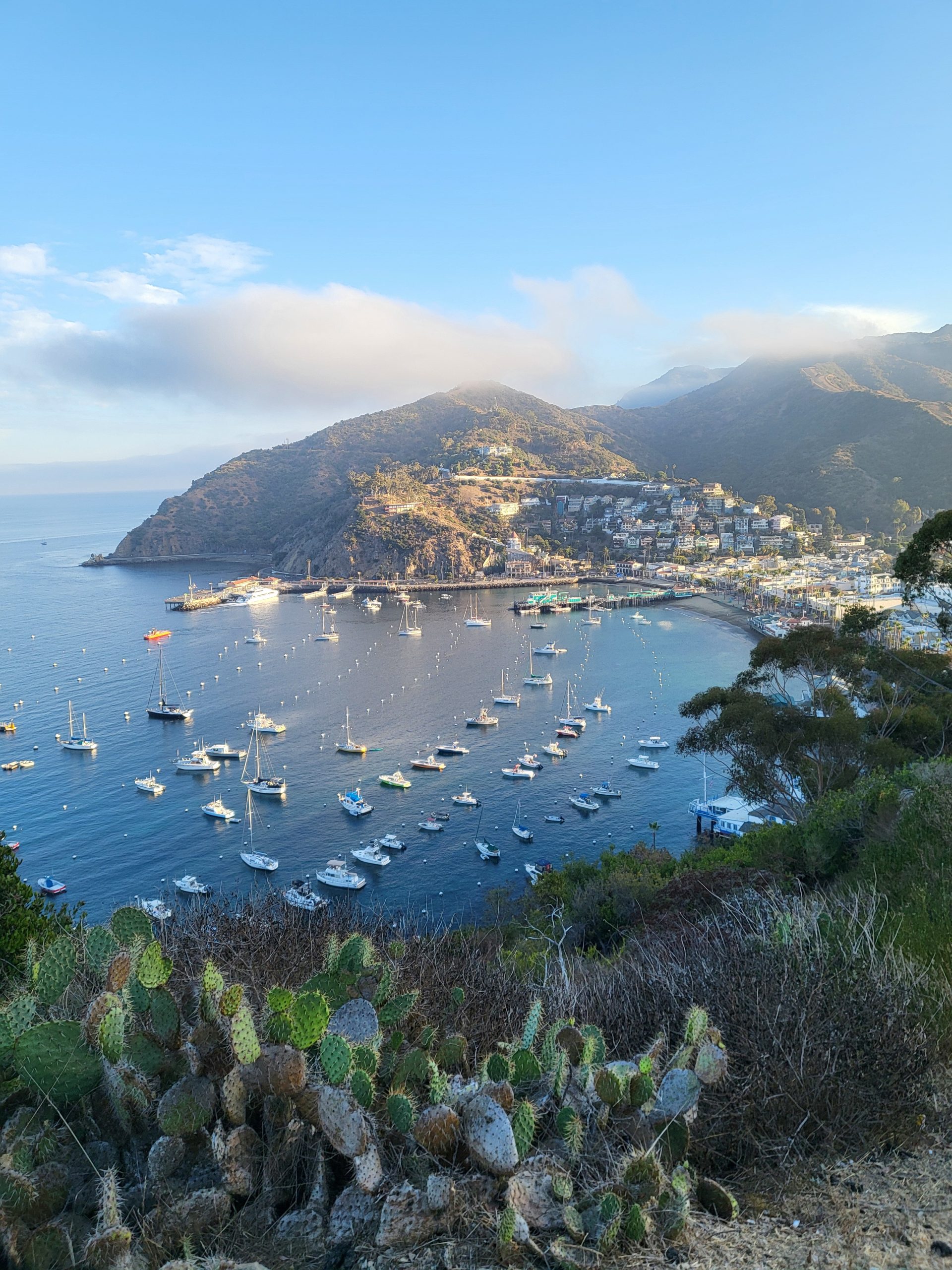
Editor’s note: Jim Watson is the author of “Mysterious Island: Catalina,” available on Amazon, Kindle and in stores all over Avalon.
You may have noticed in the news over the past week the story about the El Salvadoran fisherman who was rescued after supposedly spending 18 months adrift in the Pacific.
Jose Salvador Alvarenga claims that he and a crew member began their fateful odyssey when their boat’s engine quit while they were fishing off the coast of Mexico back in December of 2012.
Editor’s note: Jim Watson is the author of “Mysterious Island: Catalina,” available on Amazon, Kindle and in stores all over Avalon.
You may have noticed in the news over the past week the story about the El Salvadoran fisherman who was rescued after supposedly spending 18 months adrift in the Pacific.
Jose Salvador Alvarenga claims that he and a crew member began their fateful odyssey when their boat’s engine quit while they were fishing off the coast of Mexico back in December of 2012.
To make a long story short, Alvarenga’s fellow drifter died about four months into the ordeal leaving the El Salvadoran to drift alone more than 6,000 miles until he bumped into the tropical shores of the Marshall Islands in the South Pacific.
There’s a lot to Alvarenga’s story that doesn’t quite add up and authorities are skeptical of his claims. I have seen pictures of him after his rescue and, first of all, someone who has spent a year and a half under the tropical Pacific sun wouldn’t just have a pleasant tan, they would be positively fried.
Then there’s the question of –how shall I put this delicately—his weight. Let’s just say he has a pleasant plumpness to go with that pleasant tan, something that I find hard to believe. Evidently, if you want to shed a few pounds, drifting alone in a tiny boat on the open ocean for 18 months won’t do the trick. You’ll have to try something else.
Nevertheless, there are many tales of lost ships—much larger than Alvarenga’s fishing boat—that have gone missing, or—to employ one of my favorite oxymorons—have “turned up missing” over the centuries. As the mafia likes to say when leveling a threat at someone, “it’s a big ocean out there” and such missing ships invariably end up adding to legends of ghost ships sailing aimlessly around the Seven Seas.
Believe it or not (and I don’t know why you wouldn’t) there has even been at least one reported sighting in the Pacific of that most famous of ghost ships—the Flying Dutchman—even though the ship believed responsible for the legend originally disappeared off Africa’s Cape of Good Hope.
In July of 1881, crew members of the HMS Bacchante reported seeing the spectral ship while sailing through the South Pacific. Now, mind you, the Bacchante was no lubberly merchant ship full of drunken merchant seamen, but rather a Royal Navy corvette that counted British royalty among her officer corps over the years.
“We Meet the Flying Dutchman,” opens the ship’s log. At 4 a.m. on the morning of July 11, 1881, the “Flying Dutchman crossed our bows. A strange red light as of a phantom ship all aglow, in the midst of which light the masts, spars and sails of a brig 200 yards distant stood out…,” says the log.
According to the journal, a number of hands reported seeing the phantom ship. “The look-out man on the forecastle reported her as close on the port bow, where also the office of the watch from the bridge clearly saw her, as did also the quarterdeck midshipman…”
That midshipman made his way to the bow to see what was up. “But on arriving there was no vestige nor any sign whatever of any material ship was to be seen [sic] either near or right away to the horizon,” continues the log.
The vision evidently was not confined to the Bacchante. Interestingly enough, two ships sailing nearby—the Tourmaline and the Cleopatra had witnessed the “ship” as well and signaled the Bacchante to ask if they had seen the Dutchman as well.
A sighting of the Flying Dutchman is considered a portent of doom and to make the crew’s jittery nerves even jittery-er, the following day one of the witnesses fell to his death from the fore topmast.
“At 10:45 a.m., the ordinary seaman who had this morning reported the Flying Dutchman fell from the fore topmast crosstrees on to the topgallant forecastle and was smashed to atoms.”
The unfortunate crewman, described as “a smart royal yardman and one of the most promising young hands in the ship” was buried at sea that afternoon.
So next time you’re hiking along the divide road getting that cardio up, keep a sharp eye out to sea.
You never know what you might spy.