

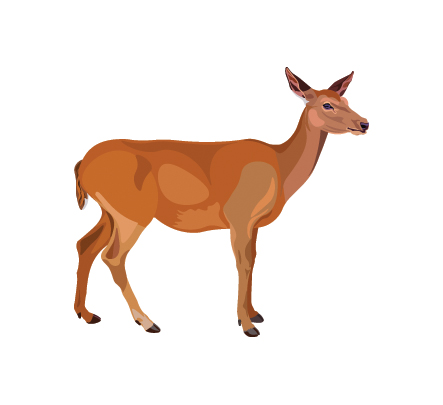
Courtesy of Catalina Island Conservancy
The Catalina Island Conservancy has opened applications for the 2026 deer hunting season, which will run from Oct. 24 through Dec. 18, 2026. Hunting tags are available at no cost, and as in 2025, eligibility is limited to Catalina Island residents.
The 2026 season will be the final recreational deer hunting season on Catalina Island as the Conservancy prepares to transition to the next phase of its state-approved restoration program. The restoration program is controversial because it includes plans to eradicate the Island’s deer population.
How to apply
Hunters must be Catalina Island residents with a local address on a valid government-issued ID or a valid City of Avalon subsidy card. Applications also require a valid California hunting license, a California state deer tag and proof of firearms liability insurance. Tags must be picked up in person, by appointment. Applications are open now at catalinaconservancy.org/hunting.
Why this is the last season
The California Department of Fish and Wildlife has approved a restoration management permit, which authorizes removal of Catalina’s non-native mule deer as part of the Conservancy’s long-term restoration efforts.
As the Conservancy transitions to this next phase of restoration, it must conclude its recreational hunting program after the 2026 season.
“For those who have hunted the Island for generations, we know the importance of this final season,” said David Solomon, interim president and CEO of the Conservancy. “We hope it’s a meaningful conclusion for the local hunters who have been part of this tradition.”
The Conservancy’s hunting program operates under a Private Lands Management agreement approved by the California Fish and Game Commission. As a private land trust, the Conservancy establishes the parameters for hunting on its lands to provide safe, managed access for visitors, residents and permitted hunters.
A season for the community
Offering this final season recognizes that members of the Island community have long participated in Catalina’s hunting program. Resident hunters know the terrain and weather, have year-round access to permitted vehicles on the Island and are well positioned to participate safely in a coordinated final season.
Hunting zones and scheduled hunt dates are designed to minimize overlap with sensitive Conservancy activities, including the annual Catalina Island fox monitoring and vaccination program, native plant surveys and habitat restoration. This coordinated approach helps ensure safe and uninterrupted access to high-use areas.
What comes next
Approximately 22 non-native mule deer were introduced to Catalina in the late 1920s and 1930s for sport hunting. Without natural predators or the ability to migrate off the Island, the population grew rapidly. By the 1940s, wildlife biologists estimated about 2,000 deer across Catalina.
The conclusion of the hunting program marks the transition to Operation Protect Catalina Island, the Conservancy’s long-term effort to restore native habitat across the Island’s 42,000 acres of protected wildlands. The state-approved restoration management permit only allows trained specialists to carry out the deer removal effort.
Decades of independent research on Catalina have shown that non-native mule deer prevent native plants from recovering after disturbances such as wildfire, allowing invasive annual grasses to spread. Over time, this creates a cycle in which invasive grasses become more dominant, increasing the likelihood of more frequent wildfire. Restoring native vegetation will improve wildlife habitat, protect watersheds and strengthen the Island’s long-term resilience.
Learn more about Operation Protect Catalina Island at catalinaconservancy.org/protect.