

In the midst of a seemingly indefinite state of drought that is expected to cost California farmers close to $3 billion, a decades-old process may be the state’s salvation.
It’s called desalination through reverse osmosis, a process of pressurizing sea water and moving it through a polymer membrane in order to extract its salt content as well as other impurities, making the sea water drinkable. The Pacific Ocean as a source of drinking water has nearly unlimited potential, but there is one area of California that already relies on the sea for water.
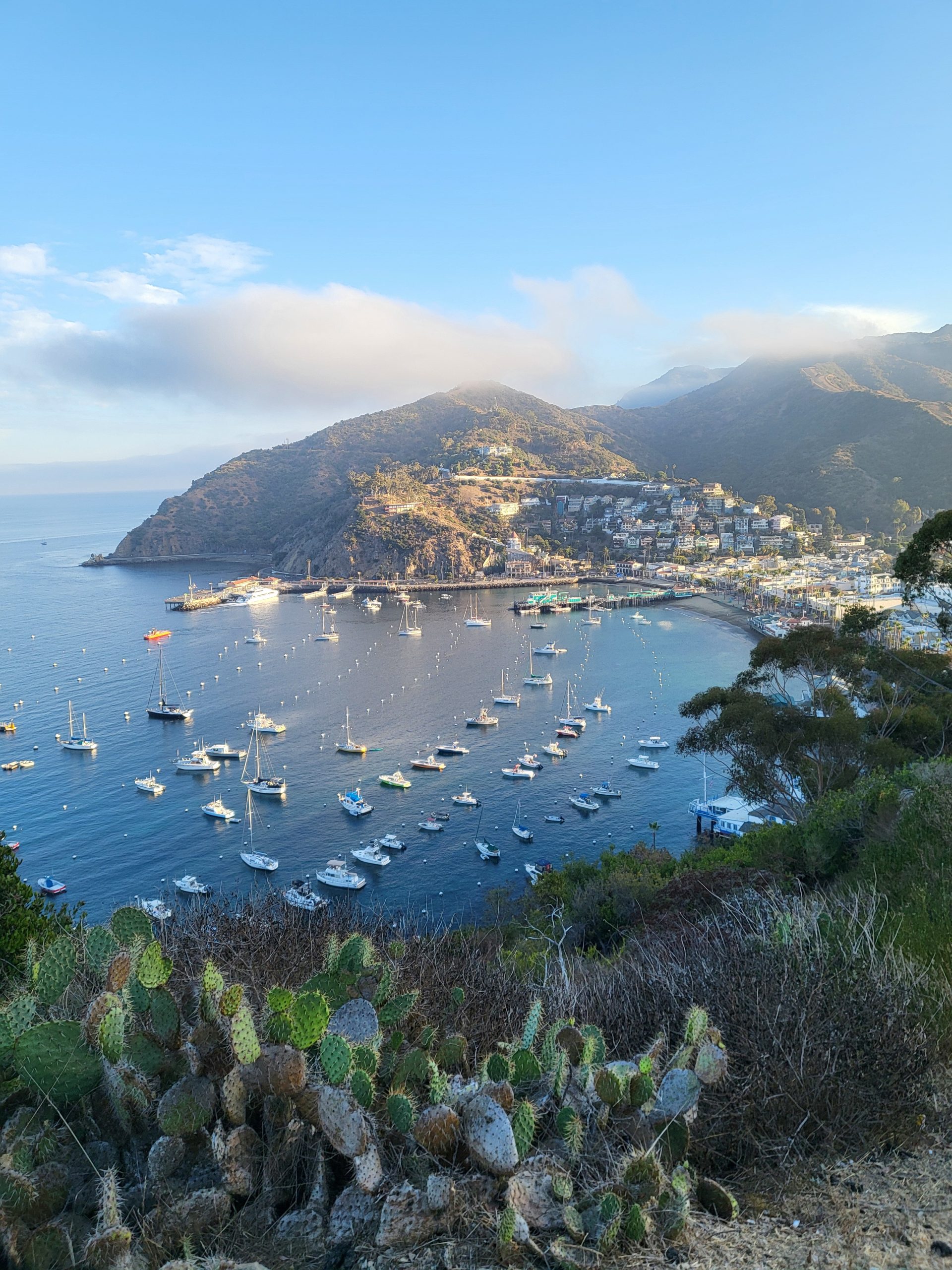
About 22 miles off the Southern California coast, Santa Catalina Island supplies its roughly 4,000 residents with drinking water with over 25 miles of pipeline around the Island, seven groundwater wells, and one desalination plant that pulls in water from a seawater well; all of this infrastructure is run by the Island’s sole electricity and water utility provider, Southern California Edison. According to Edison’s district manger for Southern California Ron Hite, the desalination plant at the Pebbly Beach Generating Station can produce a maximum of 200,000 gallons of drinking water at 38 percent efficiency for the city of Avalon, where the majority of Catalina Island residents live. Rate increases for Edison customers have occurred since the city began relying on the desalination plant in 1991, but only for the sake of updating the infrastructure with improved technology.
The largest obstacle that has historically been holding back desalination as a reliable source of drinking water has been cost but, as the market continues to diversify and technology improves, that should be increasingly less of an obstacle.
The University of Chicago’s Center for Technology Development and Ventures projects the global desalination market to grow to around $87.8 billion in 2016, even though only about one percent of the world’s drinking water supply is provided through desalination. The largest desalination plant on the world is the Ashkelon Desal Plant on Israel’s Mediterranean coast, which produces about 113 million cubic meters of drinking water daily (about 6 percent of the country’s water budget).
Desalination plants produce waste in the form of a highly salinated mixture called brine, which can have an adverse effect on shorelines if it is pumped out from its desalination plant all at one time. However, state agencies like the California Regional Water Quality Control Board have placed regulations on the Pebbly Beach desalination plant in regards to how much brine that Edison can release back into the Pacific Ocean at any one time. Edison district manager Hite also told the Catalina Islander that the company contracts biologists to study the immediate impact on Catalina’s coastal environments with routine inspections. Currently, there have been no negative effects reported on the shorelines.
The record-breaking drought (currently in its fourth year) in California is made worse by the rising temperatures of the summer months and increasing temperatures in global climate patterns that have mostly been initiated by human activity. With the state’s rain and groundwater reservoirs running at record low levels and the San Joaquin Valley basin (Central California’s largest ground water basin) being pumped dry, several areas along the Pacific Coast are considering desalination at least as a supplemental drinking water source alongside individual conservation measures.
The Pebbly Beach desalination plant is capable of meeting the demand for drinking water in Avalon during the winter months. However, Catalina Island has a large tourism sector and gets roughly 1 million visitors every year, during which time the output of the desalination plant drops from 95 percent to about 30 percent of the city’s total drinking water supply due to a higher demand for water.
In regards to the total drinking water supply of the entire Island, the Pebbly Beach desalination plant is only a supplemental source. Last summer, Edison imposed “Stage 2” restrictions on Island residents that called for them to reduce their water usage by 25 percent, lest they face more expensive water utility bills. If Edison imposes “Stage 3” restrictions this fall, residents would be forced to cut water usage by 50 percent.
Water rationing is imposed based on measurements at the Thompson Reservoir, one of the main sources of water for the Island’s east side. The “Stage 2” restrictions were implemented last year when Thompson’s water level decreased below 300 acre-feet of water; its full capacity is 1,149 acre-feet. An acre-foot is a volume of water one foot deep spread over one acre, equal to about 325,851 gallons of water. “Stage 3” rationing will be triggered if Thompson’s water level falls below 200 acre-feet. As of Thursday, July 23, the water level was 239 acre-feet.
Avalon’s City Council recently voted for an expansion of the Pebbly Beach desalination facility that would increase its maximum output by 150,000 gallons at the cost of $500,000. The extra unit for the facility would help to prevent or delay the imposing of “Stage 3” restrictions, but it is not a guarantee.
Other desalination projects across the state also hope to alleviate drought stress, including the billion dollar Carlsbad Desalination Project (owned and operated by Poseidon Water) in San Diego County, which expects to produce up to 54 million gallons of drinking water when it becomes fully operational in late 2015 and will be the largest desalination plant in the western hemisphere. The Charles E Meyer desalination plant is in the process of being reactivated by the city of Santa Barbara, having been built in 1991 in response to the 1986-1991 drought at a cost of $34 million; it was placed on an indefinite standby due to that drought ending the following year. The Huntington Beach Desalination Facility (also owned and operated by Poseidon Water) is in its final phase of obtaining approval, needing a drought permit from the California Coastal Commission to begin construction.
Earlier this year, Governor Jerry Brown imposed California’s first-ever statewide water restrictions, mandating municipalities to reduce their water usage by 25 percent. This was in response to record low levels of snow pack throughout the Sierra Nevada mountain range.
To make a comment on this story, visit https://thecatalinaislander.com.