

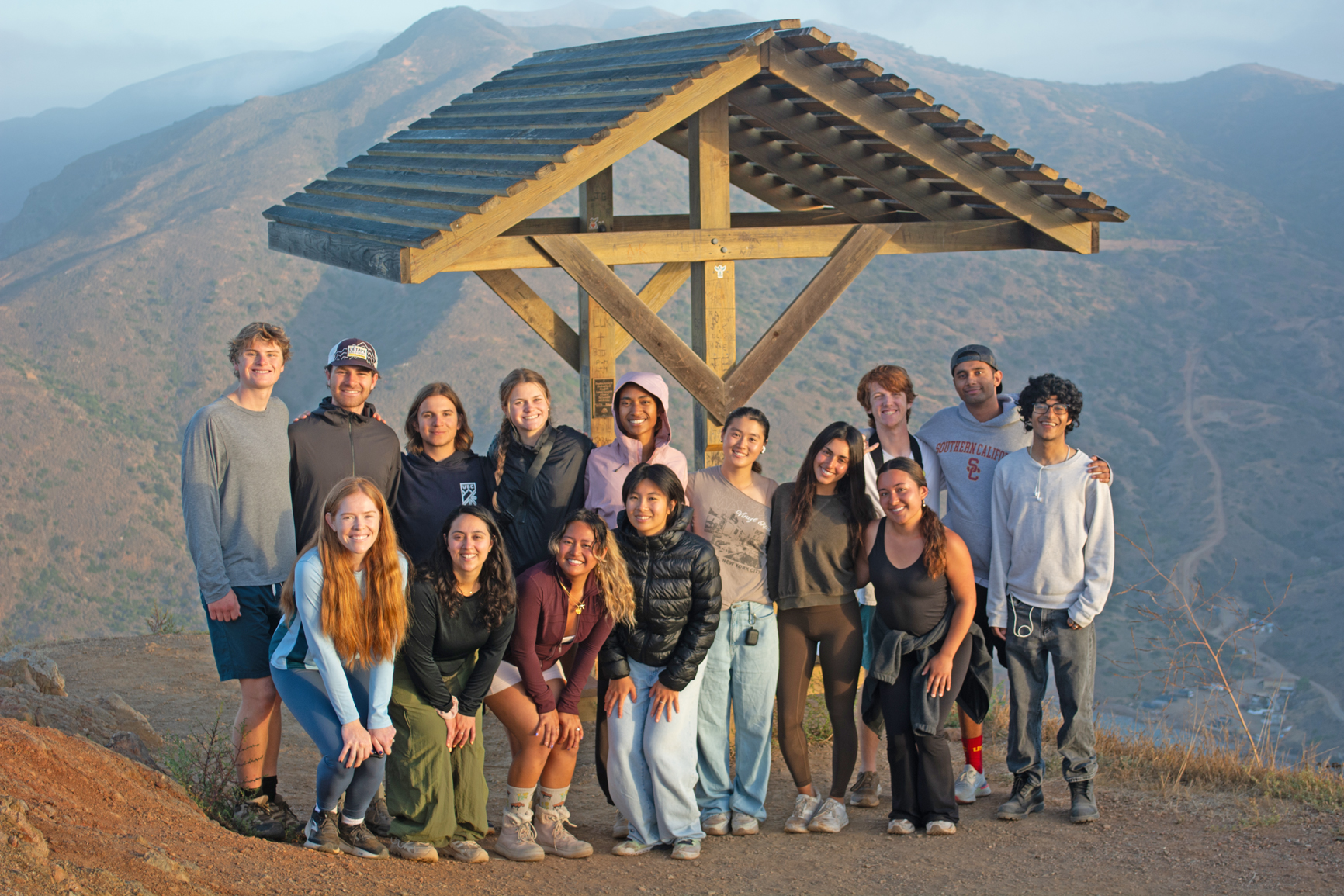
The Wrigley Institute for Environment and Sustainability on Catalina Island has been educating and training Environmental Science degree candidates for years. The island campus gives undergraduate, graduate and Phd. candidates some hands-on experience in a wide range of fields that move them towards their eventual goal.
But the campus is not just for those who a pursuing a career in the sciences. The campus also offers a short program that is open to many other major candidates, from business, to political science. The students come for what has become known as Maymester.
The four weeks of intense instruction and work is able to squeeze a semester class into one month. Students come from different backgrounds and educational focus, but the mix allows instructors to let science majors provide some support to non-science majors.
“It gives them the opportunity to learn from their peers,” John F. Heidelberg, Ph.D. and Professor of Biological Sciences and Environmental Studies, said.
Heidelberg is also the Director of the Wrigley Marine Science Center. He said four or five courses can be taught simultaneously during the program. And they all allow students to get the Catalina experience.
Like a semester at sea, but for only four weeks. Students live on the campus and get training in a variety of disciplines, such as aquatic microbiology, marine biology and coastal zone sustainability. Working with technical equipment and in close relation to the island its surrounding waters, students get an up-close understanding of the its environment.
“It provides students with in-person learning that is hands on,” Hannah Maryanski Kiszla, Education & Engagement Administrator, for the Institute, said.
Students spend time in the water, including night snorkeling, and hiking around the island. Participants study how humans have interacted with coastlines throughout history. They study sea level rise, migration patterns and how ocean recreation and major shipping impact the oceans and coastlines.
Maryanski Kiszla said that many of the science degree candidates find that the experience strengthens their passion for the field to continue pursuit of it. Other degree participants come away with a unique understanding of the environment and even some confidence in engaging with nature.
“Some say they never want to leave Catalina,” Maryanski Kiszla said.